Feature 1
Use your existing work account
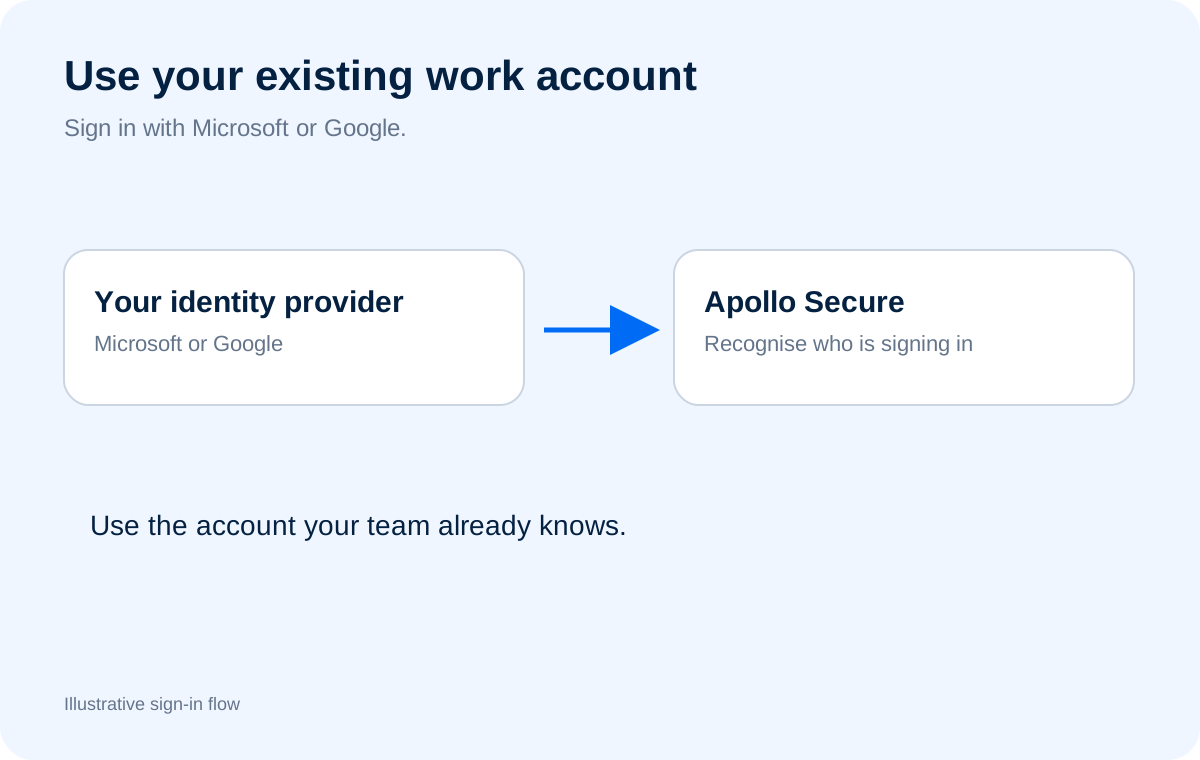
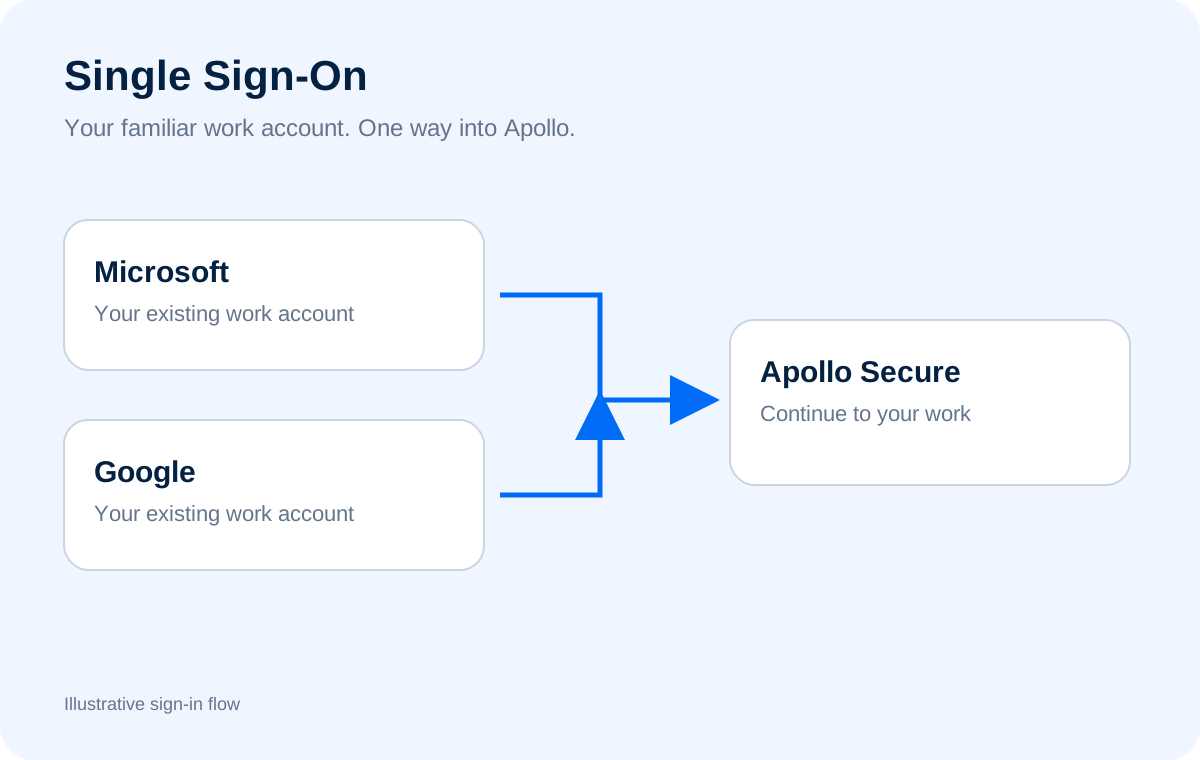
Give people a familiar way to sign in with Microsoft or Google, using the work account they already know.
- Microsoft and Google sign-in options
- Familiar work identities
- A simpler way into Apollo
Capability
Sign in to Apollo with your existing Microsoft or Google work account, so your team can use a familiar identity instead of another separate sign-in.
The outcome
Make Apollo easier to access with the work accounts your organisation already uses.
How it helps
This capability connects with the wider Apollo platform, so information can support action, evidence and reporting without being entered again.
Feature 1
Give people a familiar way to sign in with Microsoft or Google, using the work account they already know.
Feature 2
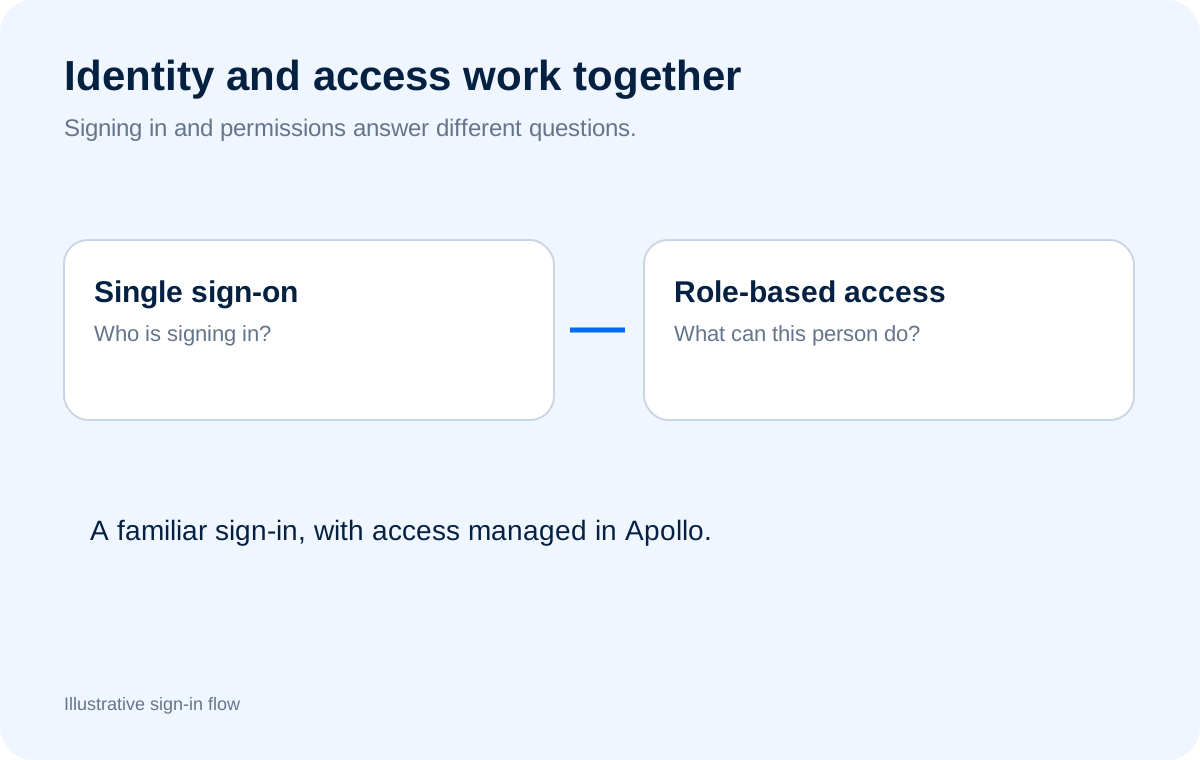
Single sign-on confirms who is signing in. Apollo's role-based access determines what that person can view and do after they sign in.
What is included
Use the capability you need now while keeping its records, work and evidence ready for related capabilities across Apollo.
Included features
Connected platform
See where this capability is available and the related capabilities and solutions that use the same connected information.
Questions and answers
Practical answers to common questions about managing this responsibility well.
Single sign-on lets people access an application using an existing identity provider account. It reduces the need to maintain a separate set of sign-in credentials for each application.
Apollo supports sign-in with Microsoft and Google work accounts, giving teams a familiar way to access the platform.
Sign-in and permissions have different roles. Single sign-on confirms the person's identity; Apollo's role-based access determines what that person can view and do.
Confirm which work accounts people should use, check their access in Apollo and test the sign-in experience with representative users before communicating it to the wider team.
Book a focused demonstration and we will show how the capability fits your current responsibilities, existing information and next practical priorities.