What should a cyber risk register contain?+
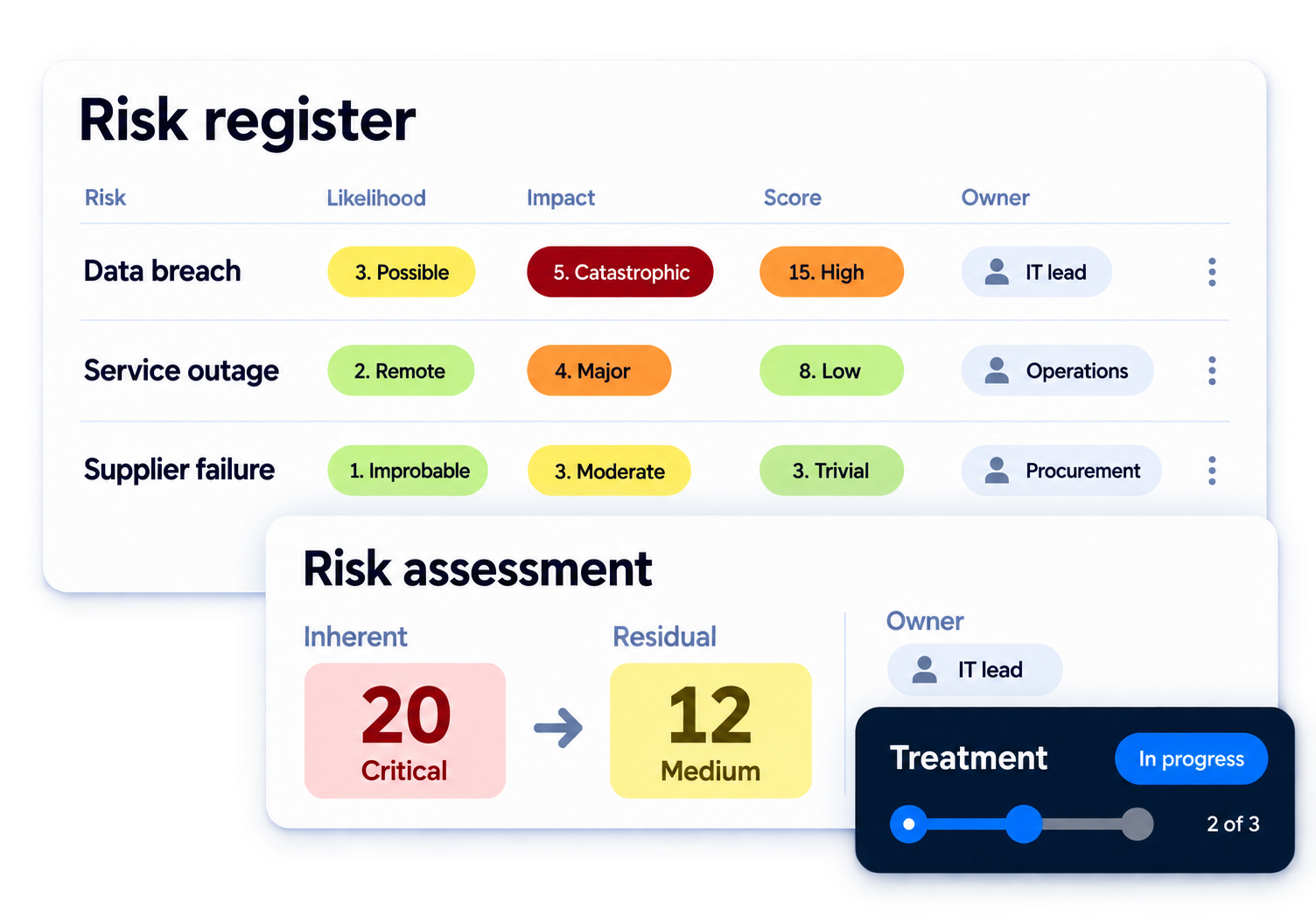
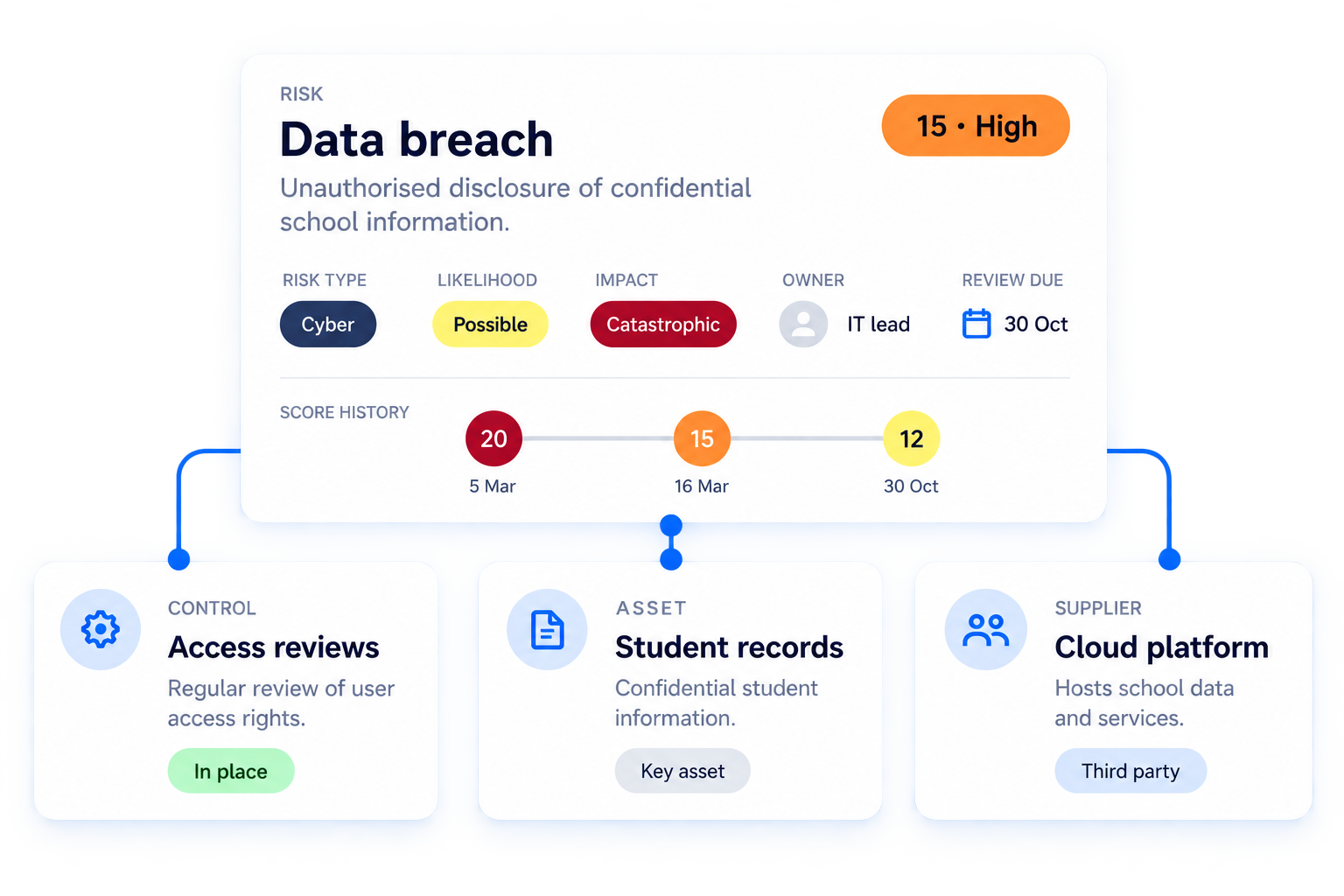
Record the risk scenario, affected systems or information, likely consequences, owner, existing controls and assessed exposure. Include the treatment decision and review date so the register supports action rather than becoming a list of threats.
How are inherent and residual cyber risk different?+
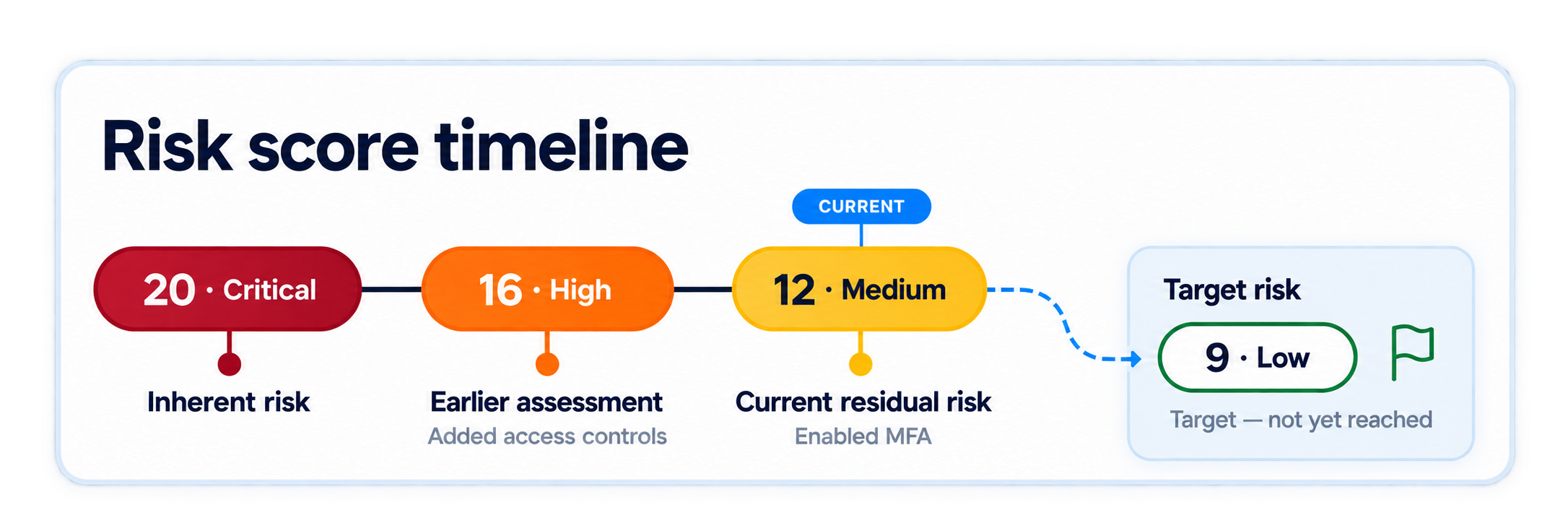
Inherent risk describes exposure before considering the controls in the assessment. Residual risk describes the exposure that remains after those controls are considered. Record the assumptions behind both ratings so reviewers can understand the judgement.
How should control implementation affect residual risk?+
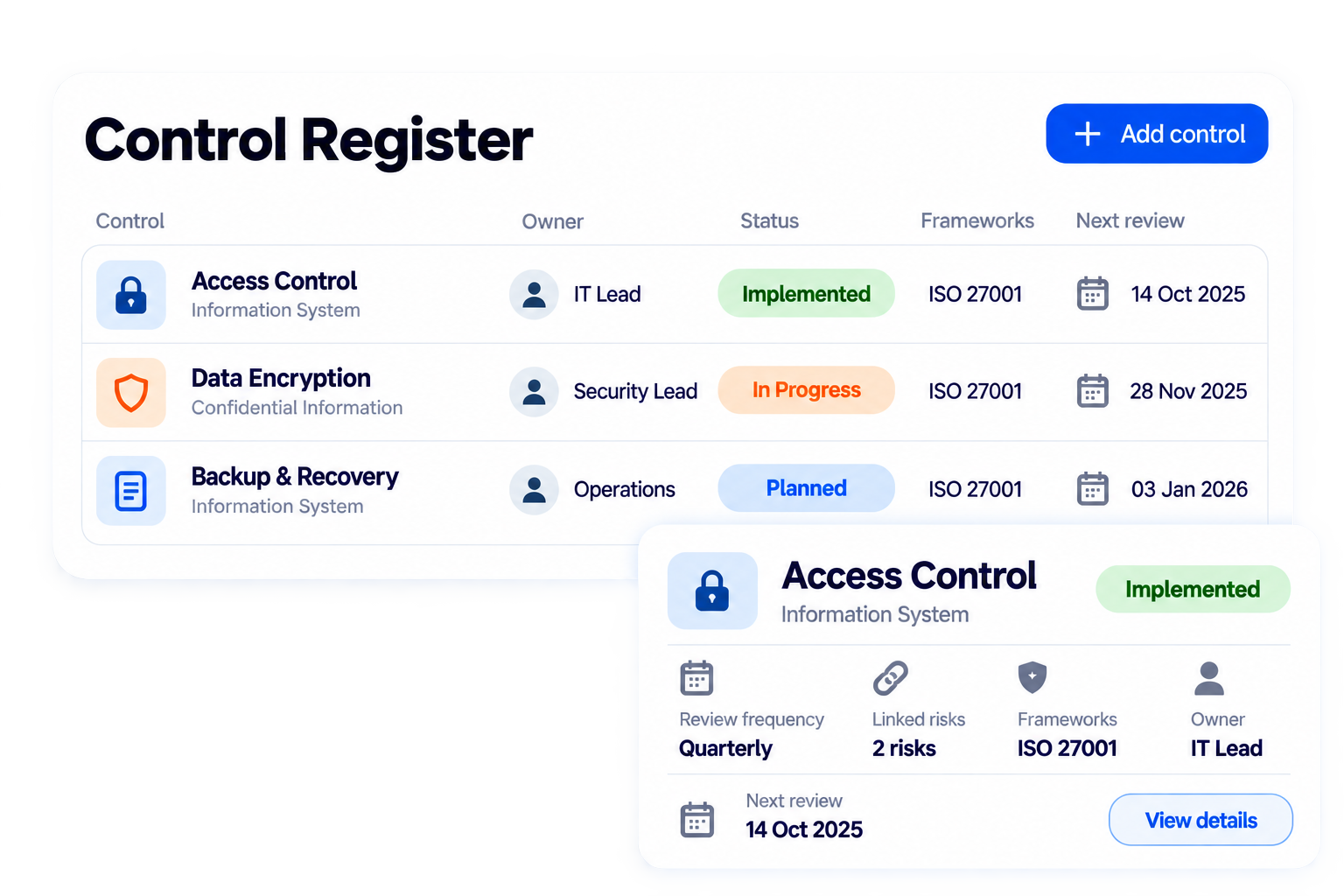
Base the residual risk assessment on controls that are implemented and operating, with evidence to support the judgement. A planned control is a treatment action, not an existing reduction in exposure. Review control effectiveness, reassess likelihood and impact, and record whether the remaining risk needs further treatment or an accountable acceptance decision.
Who should own a cyber risk?+
Assign the risk to someone who can make or escalate decisions about the affected activity. Technology staff may operate the controls, while the accountable risk owner decides whether treatment and remaining exposure are appropriate within the organisation's governance process.
What should leaders see in cyber risk reporting?+
Show material exposure, significant changes, treatment progress and decisions requiring attention. Keep the connection to business impact clear, and identify overdue reviews or actions so leaders can see where intervention is needed.