Feature 1
Prepare realistic exercises
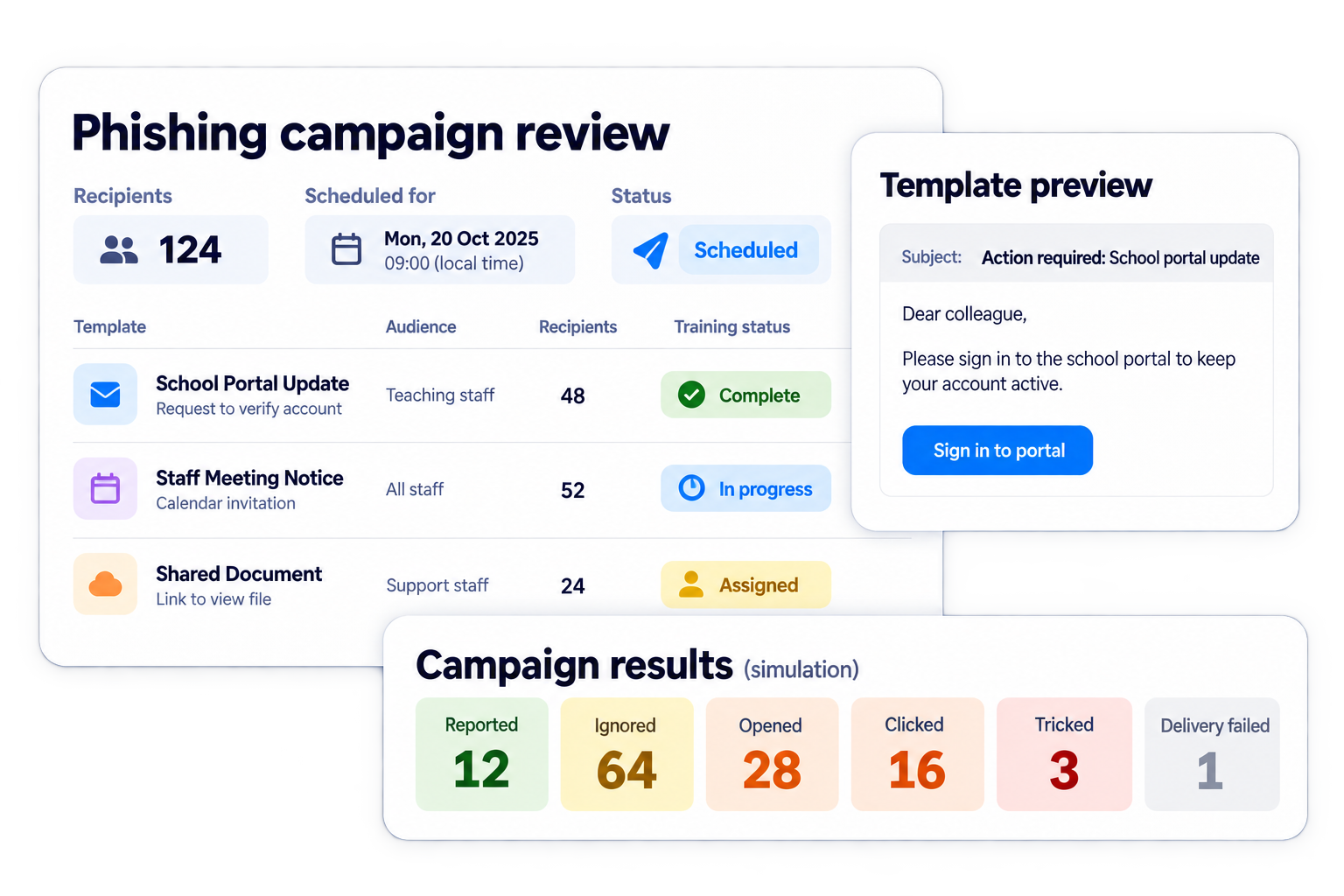
Choose an appropriate scenario, audience and schedule while keeping each campaign authorised and controlled.
- Use prepared campaign templates
- Select people or groups
- Schedule delivery windows

Product
Run realistic, authorised phishing exercises that help staff recognise common techniques and learn safely from mistakes.
Included capabilities
The outcome
Identify where people need more support and turn realistic practice into focused learning rather than blame.
How it helps
This product connects with the wider Apollo platform, so information can support action, evidence and reporting without being entered again.
Feature 1
Choose an appropriate scenario, audience and schedule while keeping each campaign authorised and controlled.
Feature 2
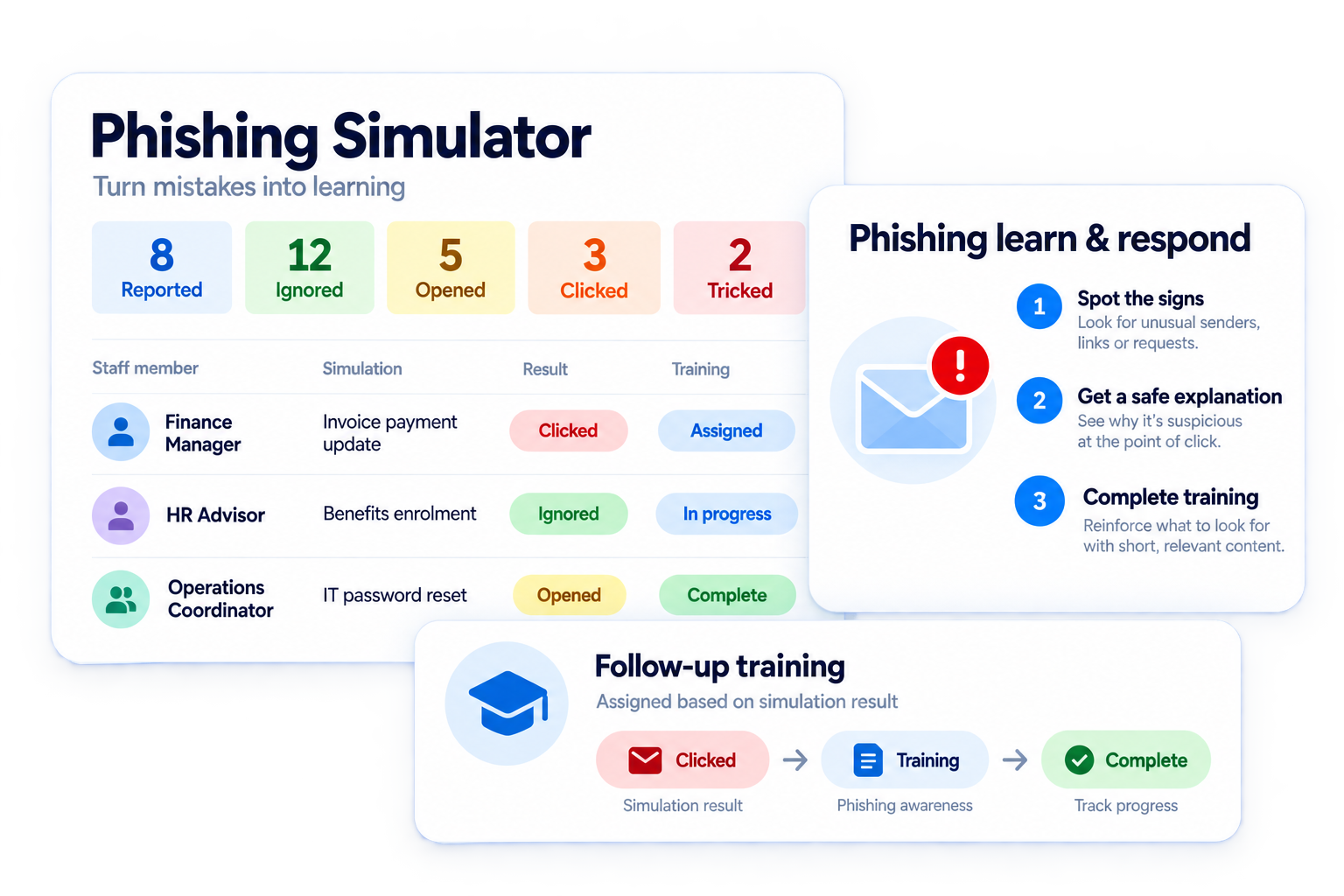
Give staff a safe explanation at the point of interaction and connect results to relevant awareness content.

Feature 3
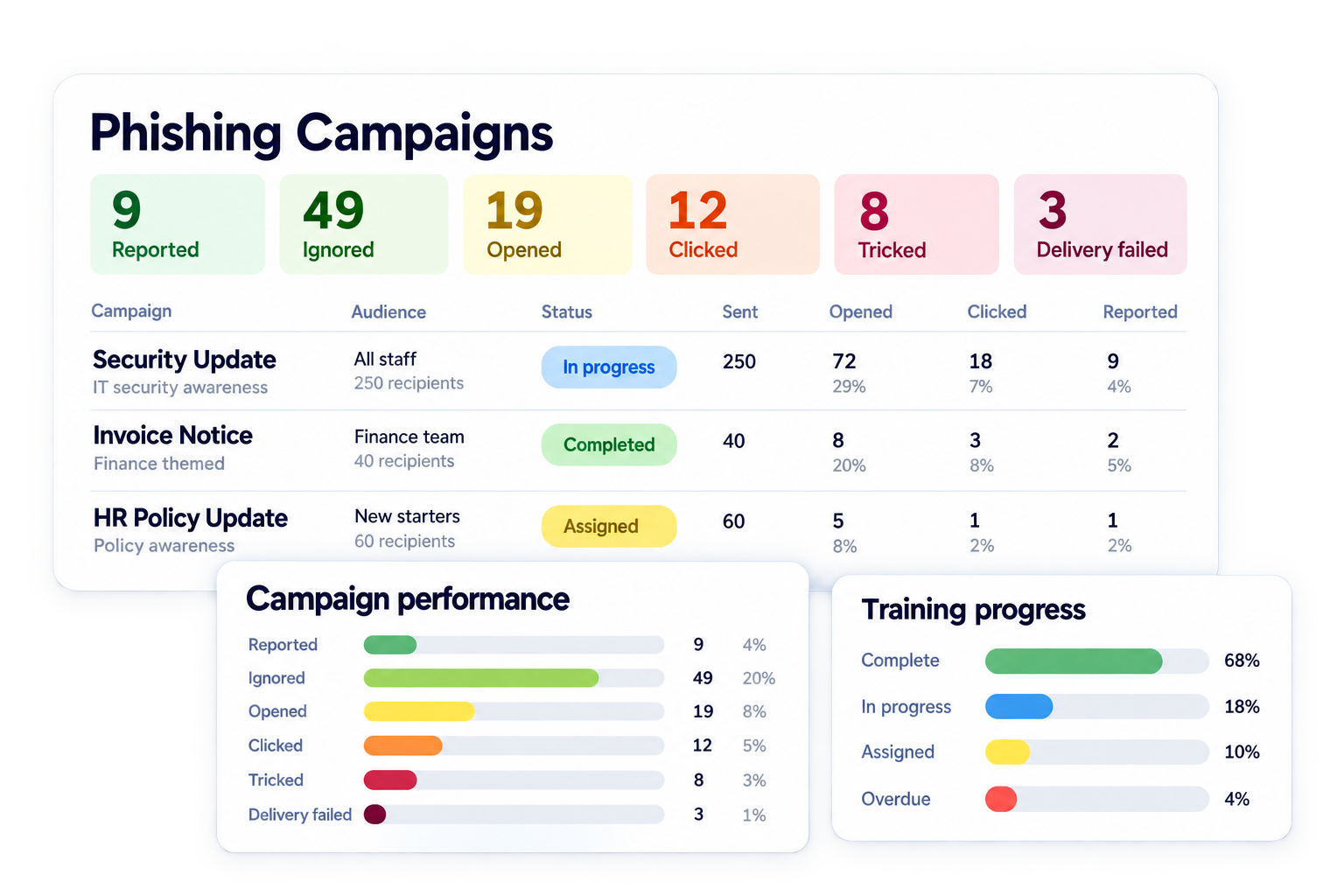
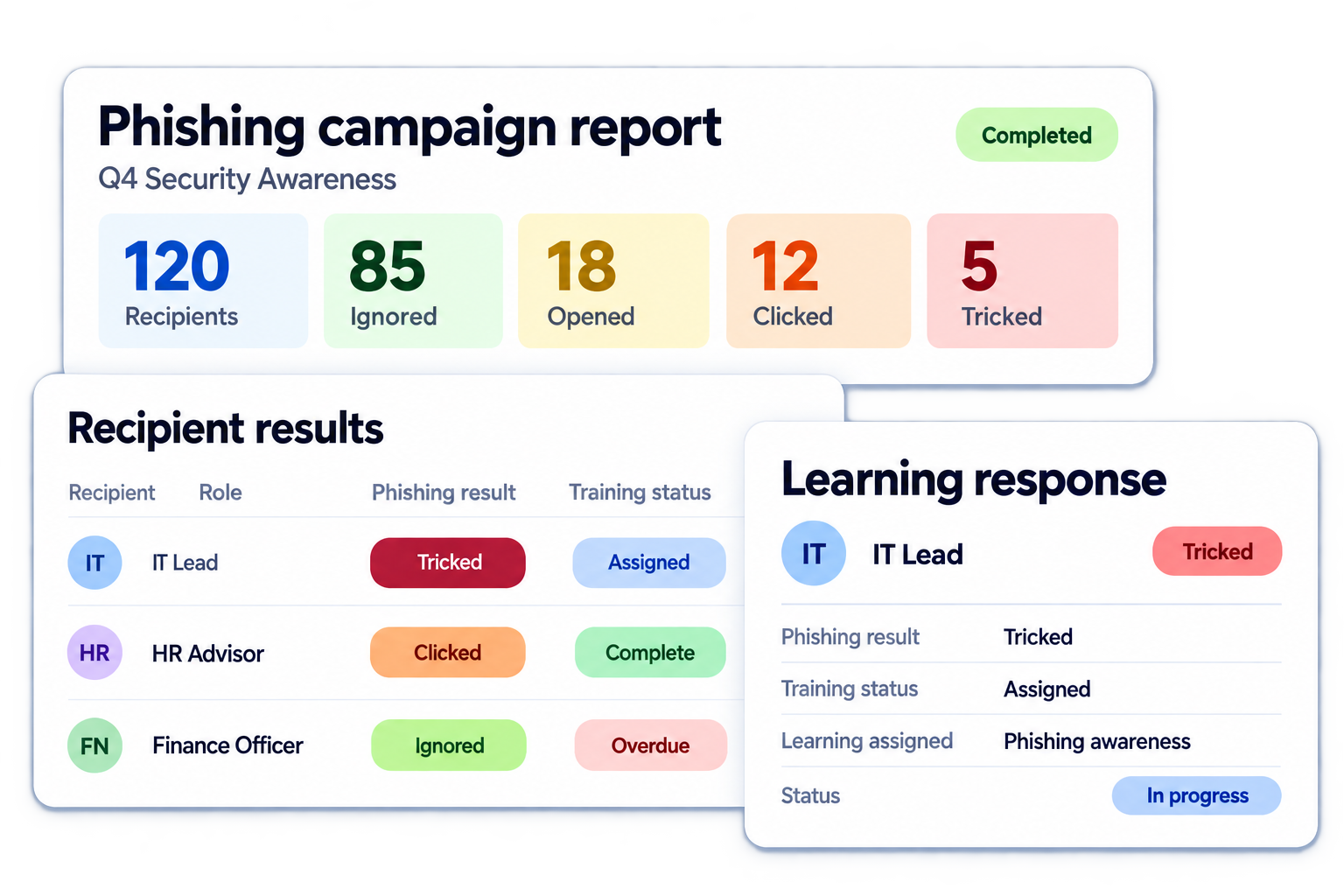
Review reporting and interaction trends to focus future training where it can be most useful.

What is included
Use the product you need now while keeping its records, work and evidence ready for related products across Apollo.
Included features
Connected platform
See the related products and solutions that use the same connected information.
Product
Deliver practical security awareness training and maintain clear completion records for staff and leaders.
Explore productProduct
Monitor whether staff credentials have appeared in known data breaches and prompt practical follow-up when exposure is identified.
Explore productCustomer proof
See how customers use this product as part of a broader security, governance or compliance outcome.
Capabilities in this product
Explore the workflows and detailed features behind each capability. Shared capabilities may also support other Apollo products.
Run authorised phishing simulations and use recipient outcomes to guide safer behaviour and follow-up learning.
Explore capabilityTurn current records into clear progress views for teams, executives and boards.
Explore capabilityAssign, prioritise and track responsibilities across all aspects of your GRC program.
Explore capabilityQuestions and answers
Practical answers to common questions about managing this responsibility well.
Run realistic, authorised phishing exercises that help staff recognise common techniques and learn safely from mistakes. Identify where people need more support and turn realistic practice into focused learning rather than blame.
It should cover Campaign templates, Target groups, Campaign scheduling, Safe landing experiences and Outcome tracking, with clear ownership, review and evidence rather than disconnected activity.
Ownership should sit with the person who can make decisions, allocate resources and keep the work current. A governance or specialist team may coordinate the process, but material records and actions need named accountable owners.
Use scheduled reviews based on risk and trigger an earlier reassessment after relevant incidents, regulatory change, audit findings or material changes to systems, suppliers or operating conditions.
Retain the source information, owner, review and approval history, supporting documents and actions needed to explain what was known, what was decided and what happened next. Relevant records include phishing campaigns, dashboards & reporting and task management.
Book a focused demonstration and we will show how the product fits your current responsibilities, existing information and next practical priorities.