How should organisations manage compliance obligations?+
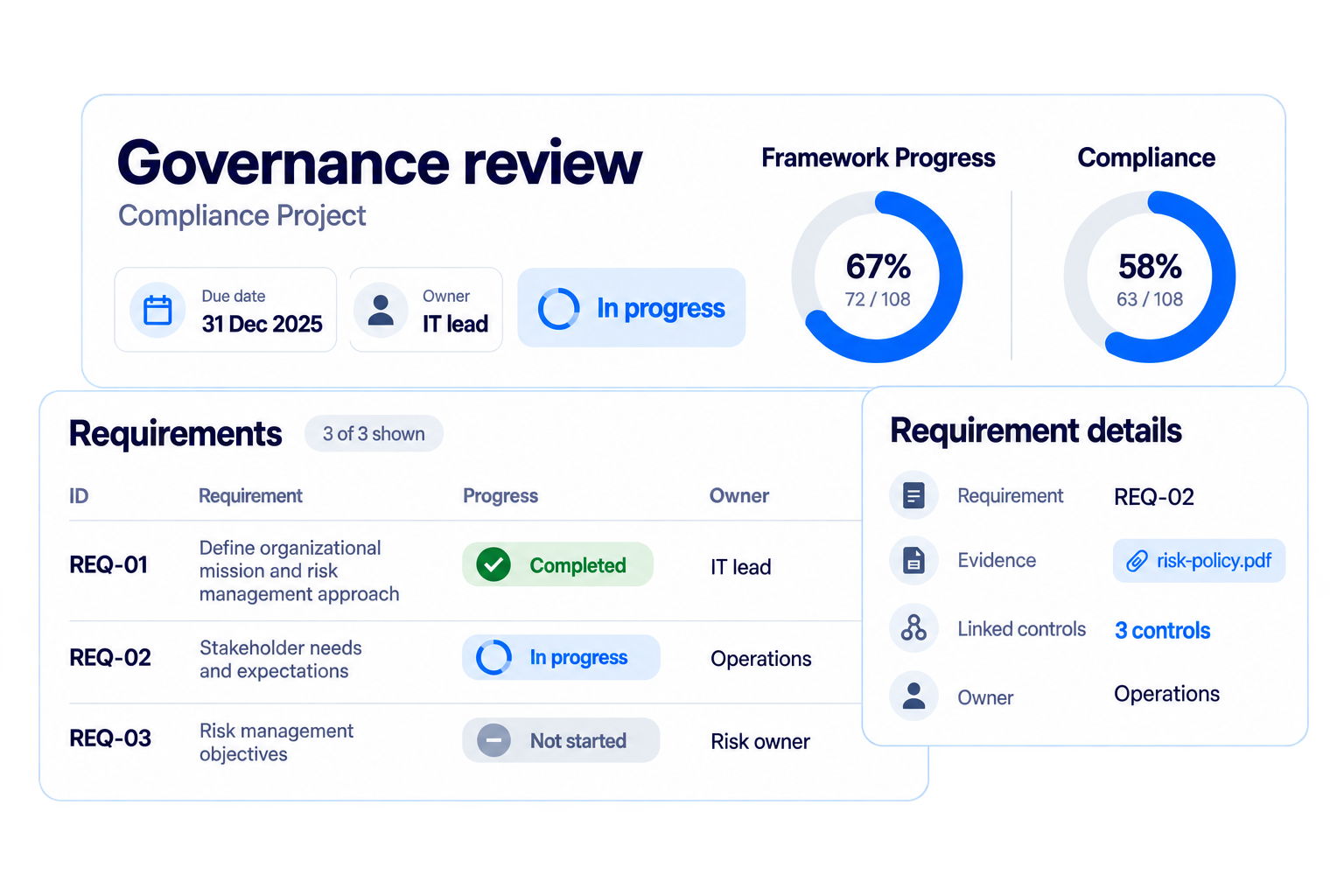
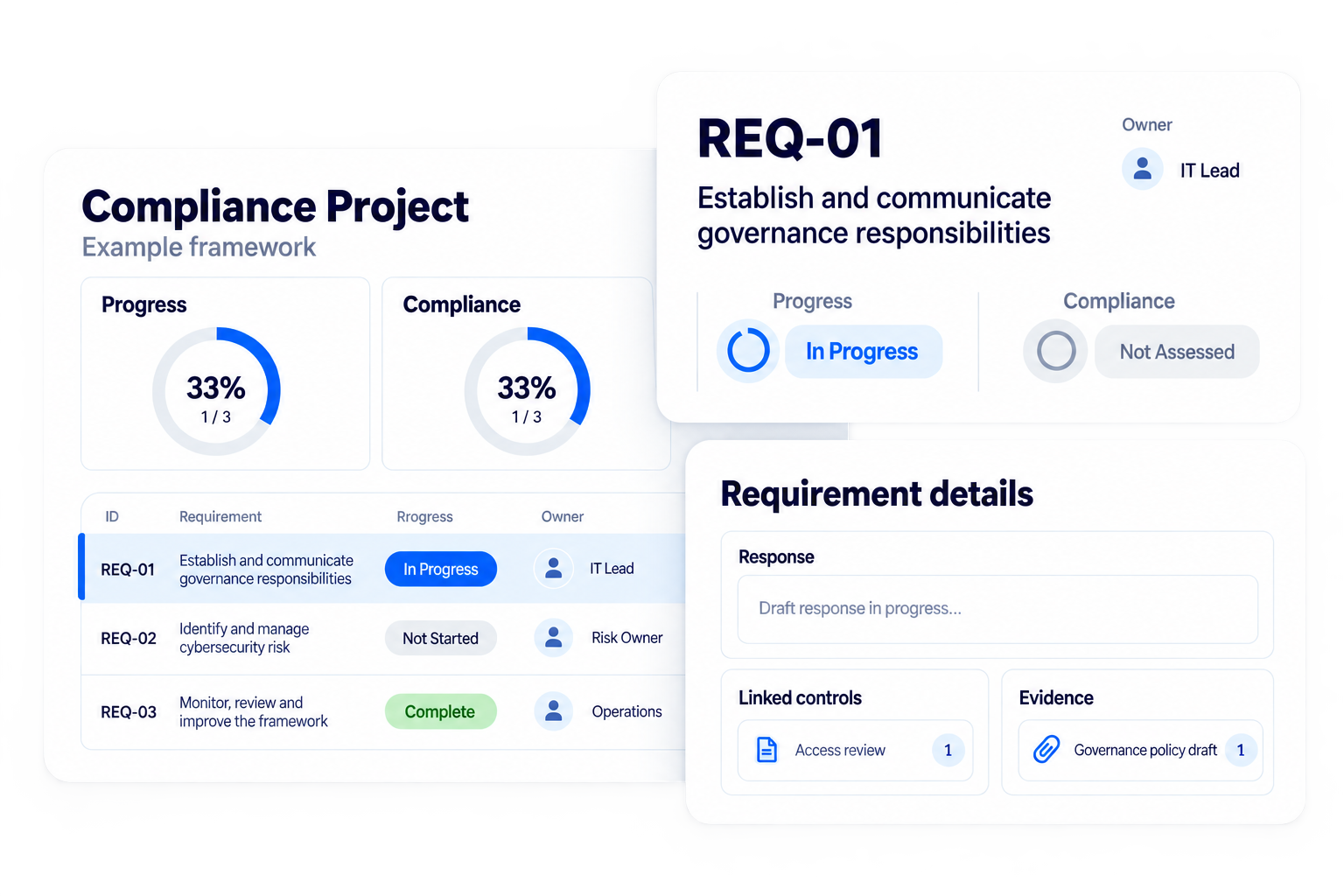
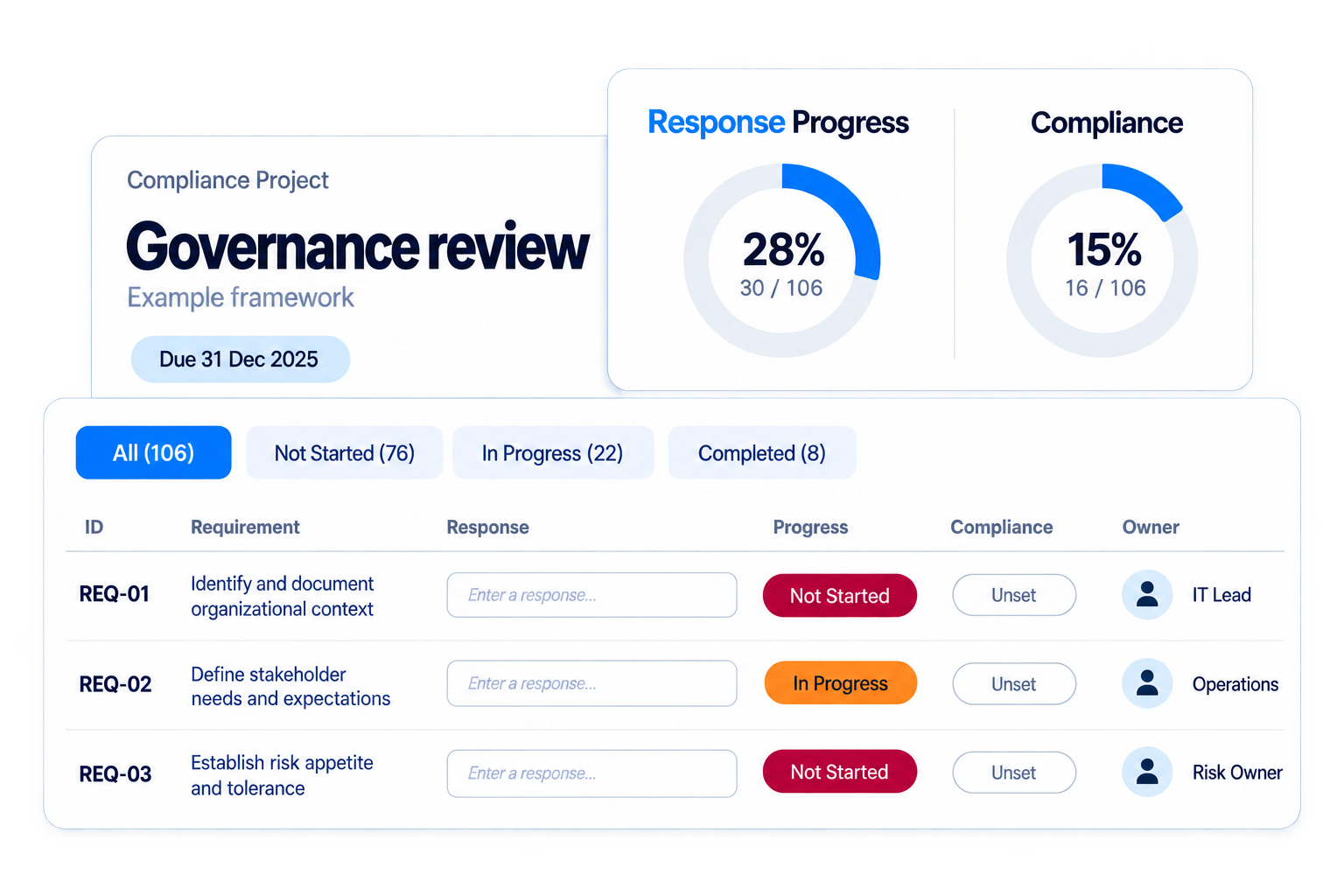
Use compliance management software to turn frameworks and obligations into active projects with owned responses, linked controls, evidence and follow-up work. Know what applies, what has been addressed and where evidence or action is still required.
What should a good process for compliance obligations include?+
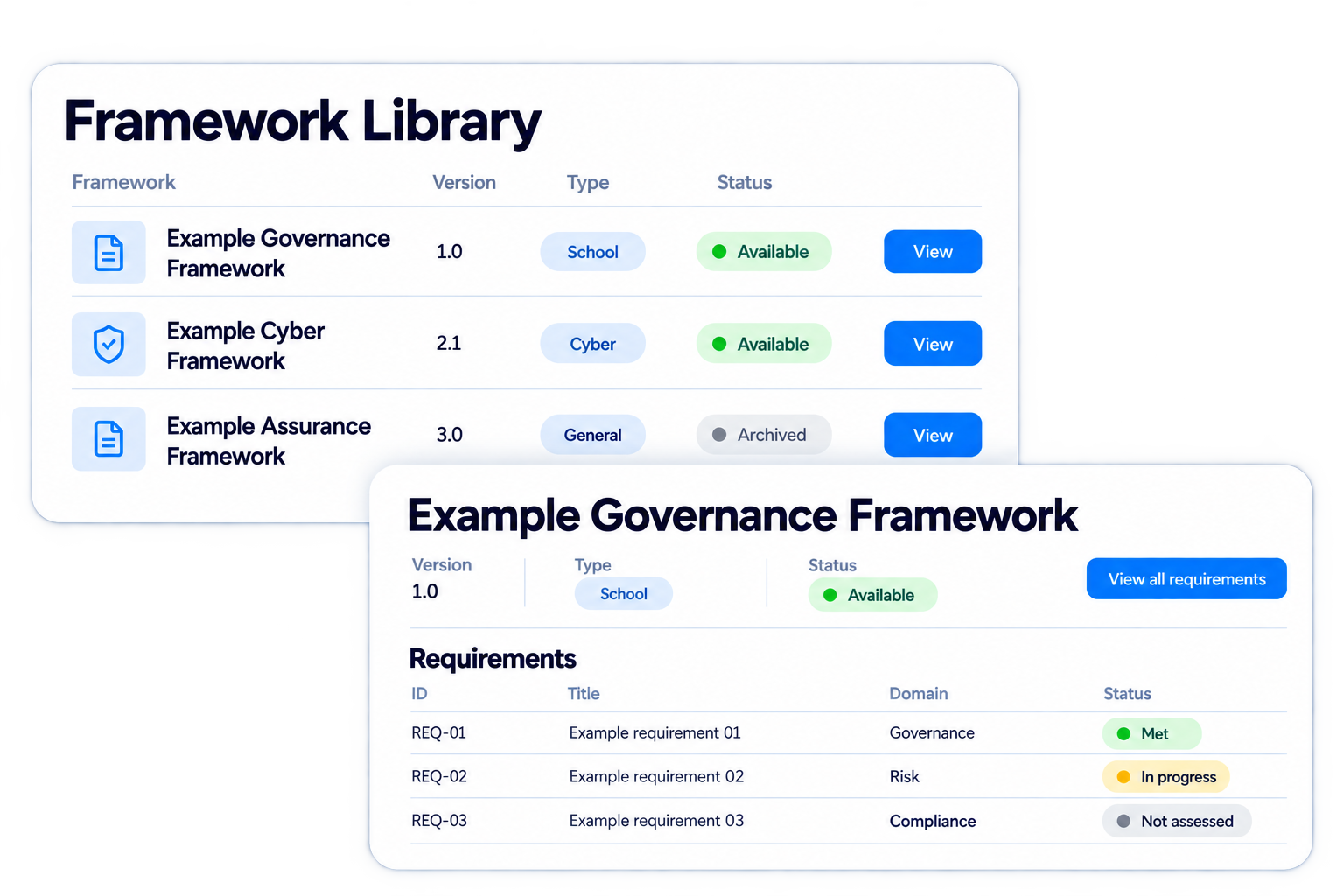
It should cover Framework library, Compliance projects, Requirement responses, Evidence collection and Control mapping, with clear ownership, review and evidence rather than disconnected activity.
Who should be accountable for compliance obligations?+
Ownership should sit with the person who can make decisions, allocate resources and keep the work current. A governance or specialist team may coordinate the process, but material records and actions need named accountable owners.
How often should compliance obligations be reviewed?+
Use scheduled reviews based on risk and trigger an earlier reassessment after relevant incidents, regulatory change, audit findings or material changes to systems, suppliers or operating conditions.
What evidence should be retained for compliance obligations?+
Retain the source information, owner, review and approval history, supporting documents and actions needed to explain what was known, what was decided and what happened next. Relevant records include frameworks, compliance projects, control register and evidence & history.