1
Establish the baseline
Understand current exposure, deliver essential awareness and measure how staff respond to realistic scenarios.
Solution
Help school staff recognise current cyber threats, practise safer behaviour and give technology leaders a measurable way to reduce people-related risk.
The problem
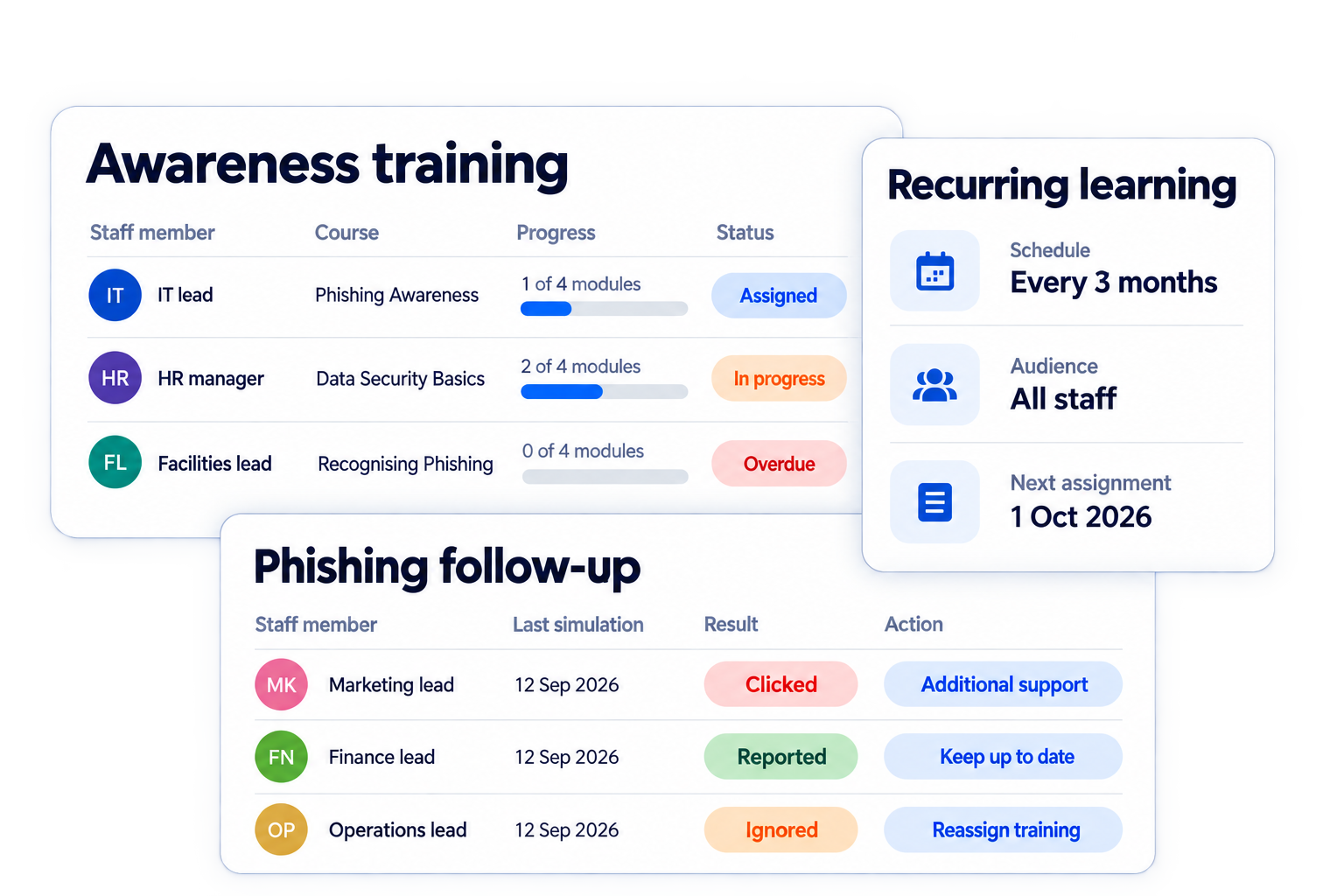
You know one convincing email can bypass technical controls, but completion rates alone do not tell you whether staff can recognise and resist a real attack.
Staff should be supported to make safer decisions—not blamed for threats they were never properly prepared to face.
A clearer way forward
Apollo Secure combines relevant awareness training, realistic phishing simulations and breach signals so schools can coach staff and measure improvement over time.

Trusted in education
Apollo Secure works with education industry bodies to ensure we're building the best Edtech solution for Australian schools.


A simple plan
Start from the position you have today and build a repeatable rhythm your team can maintain.
Understand current exposure, deliver essential awareness and measure how staff respond to realistic scenarios.
Use results to provide relevant follow-up instead of giving every person the same generic training.
Track participation, simulation outcomes and exposure signals to demonstrate progress to school leaders.
Connected in Apollo
Apollo connects these capabilities so records, ownership, evidence and reporting remain in one place.
Assign practical security learning to staff and maintain clear completion records over time.
Explore capabilityRun authorised phishing simulations and use recipient outcomes to guide safer behaviour and follow-up learning.
Explore capabilityCheck whether staff email accounts appear in known breach data and keep the exposure visible for follow-up.
Explore capability
The outcome
Staff recognise suspicious activity sooner, know how to respond and receive targeted support while leaders can see whether the program is working.
Questions and answers
Practical answers to common questions about managing this responsibility well.
Training should cover phishing, account security, handling student and staff information, safe use of school systems, incident reporting and role-specific risks. It should reflect current school scenarios rather than generic consumer advice alone.
Provide a baseline during induction, regular refreshers throughout the year and targeted learning after incidents, policy changes or simulations. Short reinforcement across the year is generally more useful than one annual event.
Simulations can be useful when they are safe, proportionate and focused on learning. They should provide immediate guidance, protect staff dignity and improve processes and controls rather than punish individuals.
Track training participation alongside phishing reporting, simulation trends, repeated-risk patterns and relevant incidents. Improvement means staff recognise and report concerns sooner, not merely that they completed a module.
See how Apollo Secure can help your team replace scattered work with a clear, repeatable approach.