Feature 1
Prioritise the risks that need attention
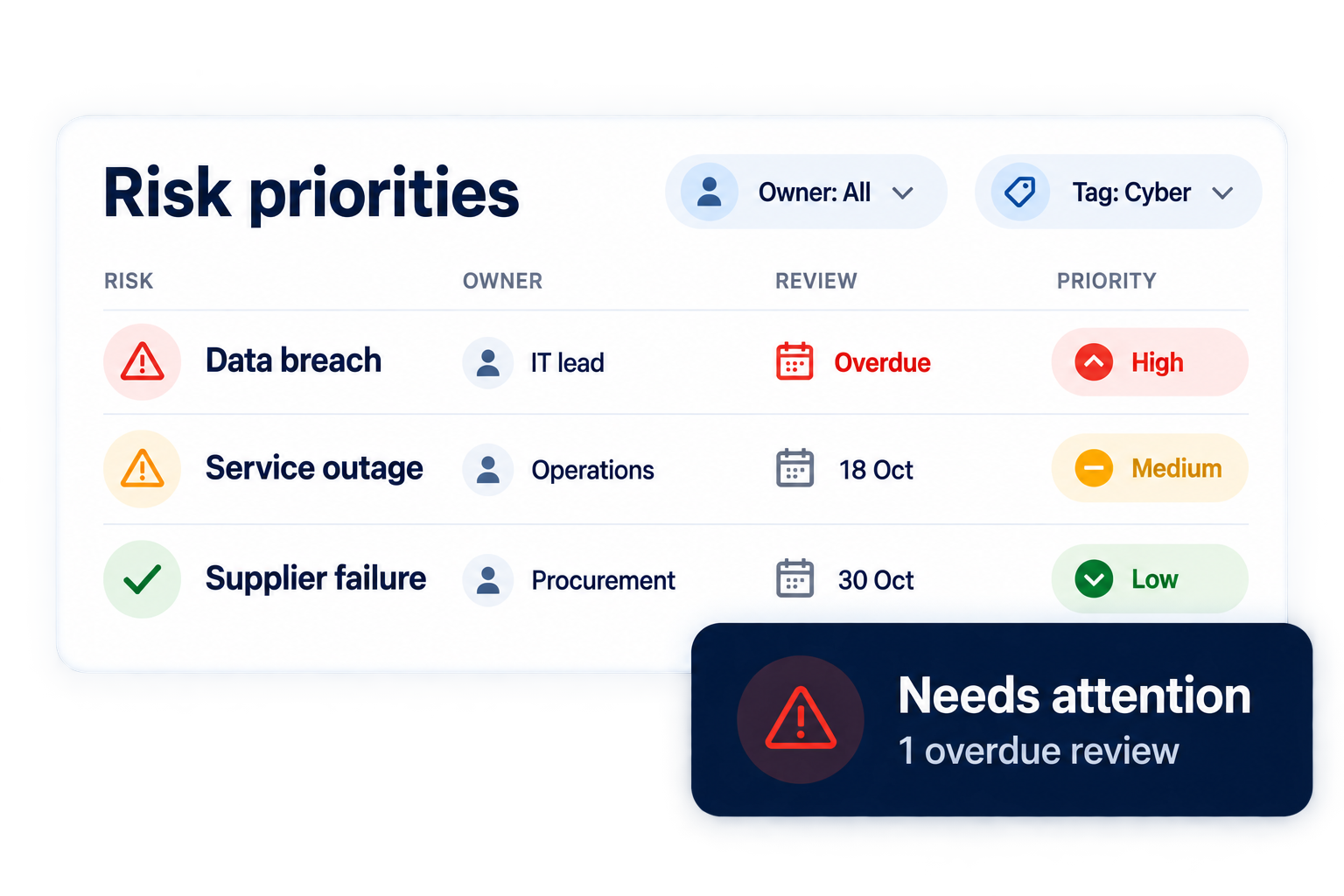
Use current scores, ownership and review information to understand exposure and focus governance attention.
- Compare risk scores
- Filter by owner and tag
- Review overdue work

Capability
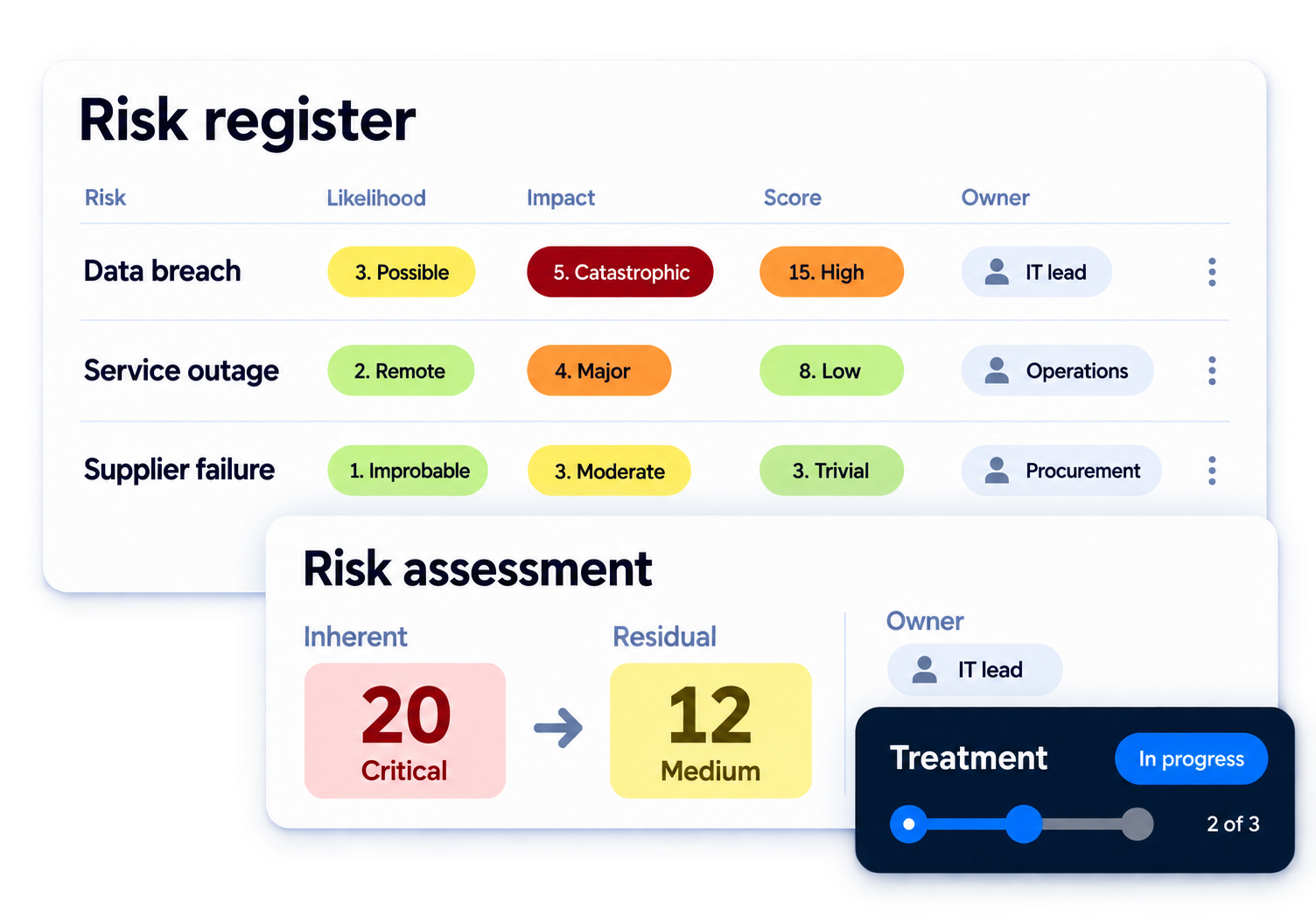
Maintain the risks the organisation manages, with ownership, scoring, treatment and connected context in one current register.
The outcome
Give every material risk a clear owner, an explainable score and a practical path to treatment.
How it helps
This capability connects with the wider Apollo platform, so information can support action, evidence and reporting without being entered again.
Feature 1
Use current scores, ownership and review information to understand exposure and focus governance attention.
Feature 2
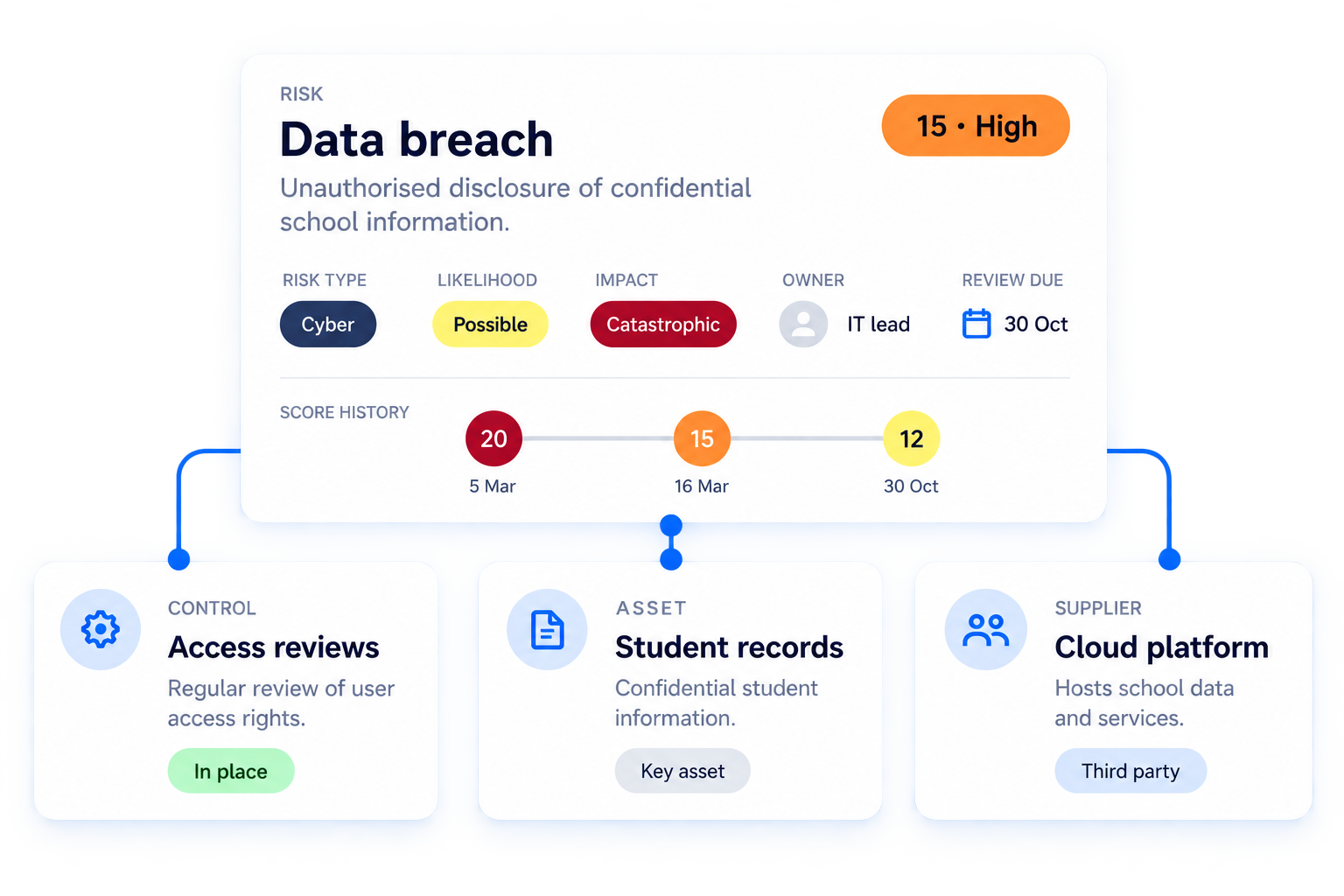
Open a risk to connect its scenario, score changes, controls, related records and treatment work.
What is included
Use the capability you need now while keeping its records, work and evidence ready for related capabilities across Apollo.
Included features
Connected platform
See where this capability is available and the related capabilities and solutions that use the same connected information.
Maintain the measures used to reduce risk and support compliance requirements, including ownership, implementation and review.
Explore capabilityMaintain the information, systems, services and other resources the organisation depends on.
Explore capabilityMaintain the third parties the organisation relies on, their services, data context, ownership and review status.
Explore capabilityCustomer proof
See how customers use this capability as part of a broader security, governance or compliance outcome.
Questions and answers
Practical answers to common questions about managing this responsibility well.
Give every material risk a clear owner, an explainable score and a practical path to treatment.
It should cover risk scenarios and consequences, inherent, residual and target scores, owners and review dates, configurable risk matrix and linked controls, assets, suppliers and tasks, with enough context to support action and explain decisions.
Ownership should sit with the person who can make decisions and keep the information current. A specialist or governance team may provide the method, but accountability should not be left with an unnamed group.
Set review dates according to risk and reassess after relevant incidents, material change, new evidence or overdue follow-up work. Preserve the history so changes remain explainable.
Keep the source information, owner, review and approval history, supporting documents and resulting actions needed to show what was considered and what happened next.
Book a focused demonstration and we will show how the capability fits your current responsibilities, existing information and next practical priorities.